
First Edition Winnie-the-Pooh (1926): Celebrating 100 Years of a Literary Classic
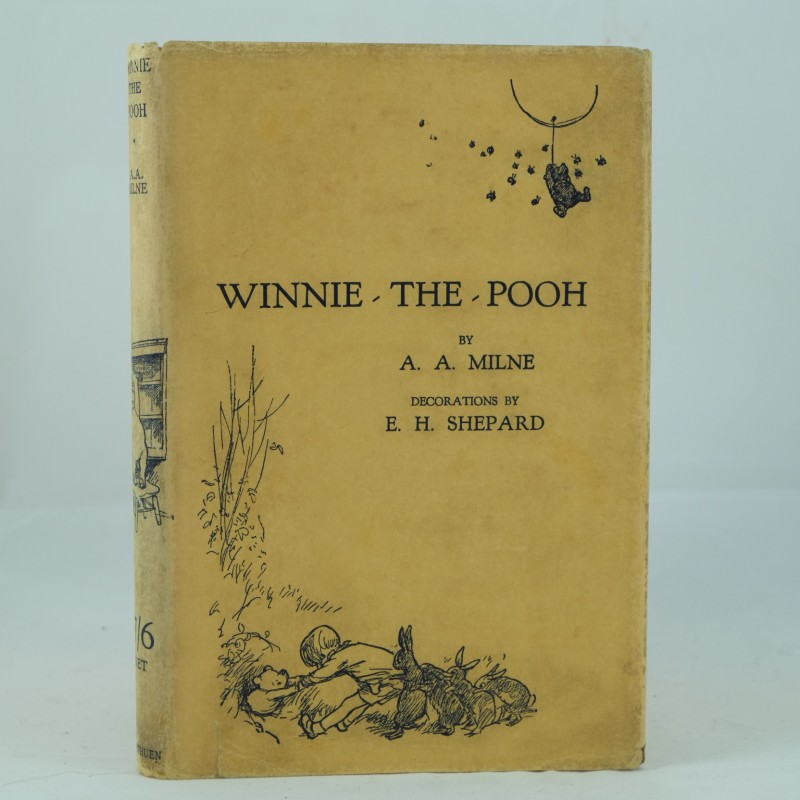 In 2026, the world marks the centenary of Winnie the Pooh, one of the most cherished works of children’s literature ever published. For a hundred years, A. A. Milne’s gentle storytelling and Ernest H. Shepard’s unmistakable illustrations have captivated readers of all ages, securing Pooh’s place as a true literary icon.
Background to the Book
Few books have achieved the enduring cultural impact of Winnie the Pooh. Milne’s softly humorous prose, paired with Shepard’s expressive line drawings, created a world that feels both comforting and timeless. Characters such as Pooh, Piglet, Tigger, and Christopher Robin inhabit the fictional Hundred Acre Wood, inspired by Ashdown Forest in East Sussex, close to Milne’s country home.
Winnie the Pooh first appeared in the short story The Wrong Sort of Bees, published in the London Evening News on 24 December 1925. Milne and Shepard had already established a successful creative partnership through their work for the humour magazine Punch, and in 1924 they collaborated on When We Were Very Young, a collection of poems. Among its characters was a teddy bear inspired by Milne’s son’s toy—an early glimpse of Pooh.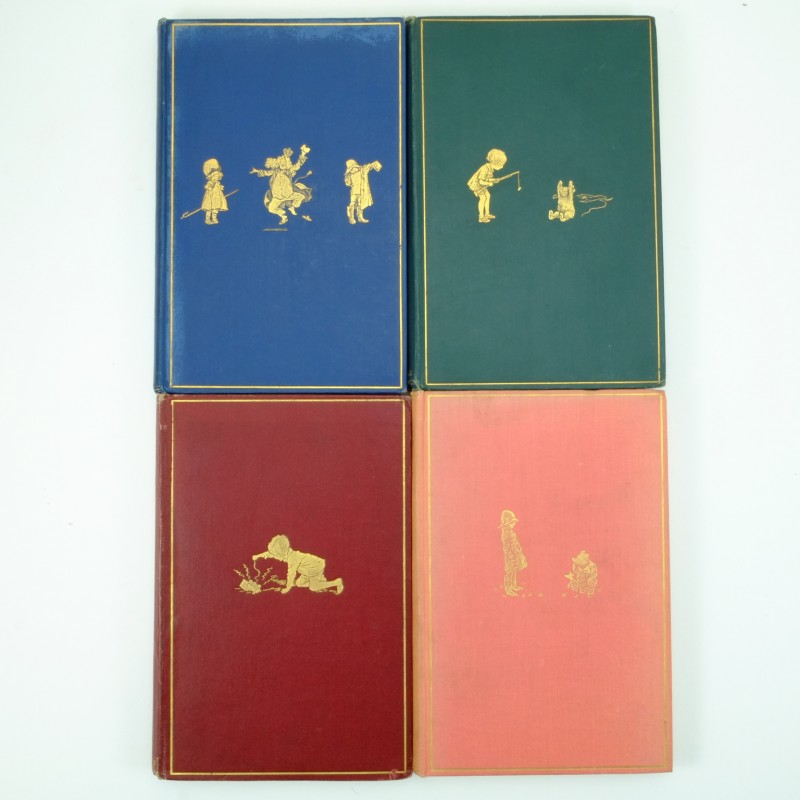
Encouraged by Shepard, Milne went on to write stories centred on Christopher Robin Milne’s toys, which became the foundation for Winnie the Pooh, published in 1926. The sequel, The House at Pooh Corner, followed in 1928. Two further poetry collections, When We Were Very Young and Now We Are Six, also featured the beloved characters and enjoyed great popularity.
Despite the extraordinary success of Winnie the Pooh, Milne did not consider himself primarily a children’s author. Before Pooh, he was a well-regarded playwright and humourist, contributing regularly to Punch. Milne also served in the British Army during the First World War, and many literary scholars suggest that the calm, reassuring world of Pooh reflects a conscious desire to offer comfort and stability in contrast to the trauma of war, lending emotional depth to what appears at first glance to be a simple children’s story.
Bibliographic Details: First Edition Winnie the Pooh (1926)
From a collecting perspective, Winnie the Pooh is widely regarded as one of the most important first editions in children’s literature, standing alongside classics such as Alice’s Adventures in Wonderland and Peter Pan.
Collectors seeking a true first edition pay close attention to bibliographic details. A first edition is identified by the 1926 date on the title page and the Methuen imprint, with no later reprint statements. Copies retaining the original dust jacket are rare and rank among the most sought-after books in the rare children’s book market.
Why a First Edition Winnie the Pooh Is So Valuable
A 1926 first edition Winnie the Pooh represents the very beginning of Pooh’s literary journey. Unlike later editions, it preserves the original text, illustrations, and overall presentation exactly as Milne and Shepard intended. As interest in landmark children’s books continues to grow, Winnie the Pooh remains a cornerstone for serious collectors.
Key factors influencing value include:
Condition of the binding and pages
Presence and condition of the original dust jacket
Provenance or notable associations
Overall completeness and originality
100 Years of Winnie the Pooh
A century after its publication, Winnie the Pooh remains a timeless classic, continuing to delight generations. Owning a first edition is not only an investment in a rare book, but also a tangible connection to one of the most enduring and beloved stories in literary history.
Browse more first and early edition books by A.A. Milne.

