The Golden Era of 1930s Dust Jackets: When Books Dressed to Dazzle
Dust Jackets – From Utility to Art Form
 Dust jackets originated in the late 19th century as disposable wrappers, meant to protect bindings from wear. By the 1930s, however, publishers had begun to recognise their promotional potential. Advances in printing technology, coupled with the growing influence of graphic design, transformed jackets into marketing tools.
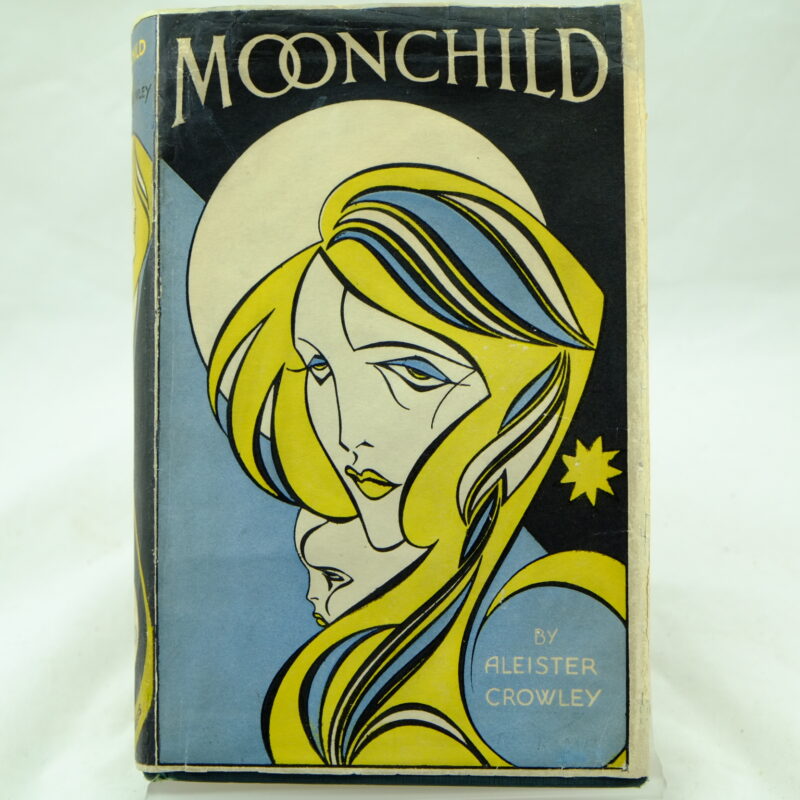
Bold typography, vivid colour, and inventive layouts caught the eye of readers scanning bookshop windows during a decade otherwise defined by economic austerity. Dust jackets like Beresford Egan’s Moonchild, published in 1929, exemplify this emerging trend in dust jacket design.
The Influence of Modernism and Art Deco
The 1930s dust jackets were shaped by contemporary design movements. Art Deco, with its geometric forms and streamlined elegance, found a natural home on book covers. At the same time, modernist principles of clarity, abstraction, and experimentation encouraged designers to push boundaries. The result was an interplay between text and image, often featuring dramatic compositions that conveyed mood as much as content. 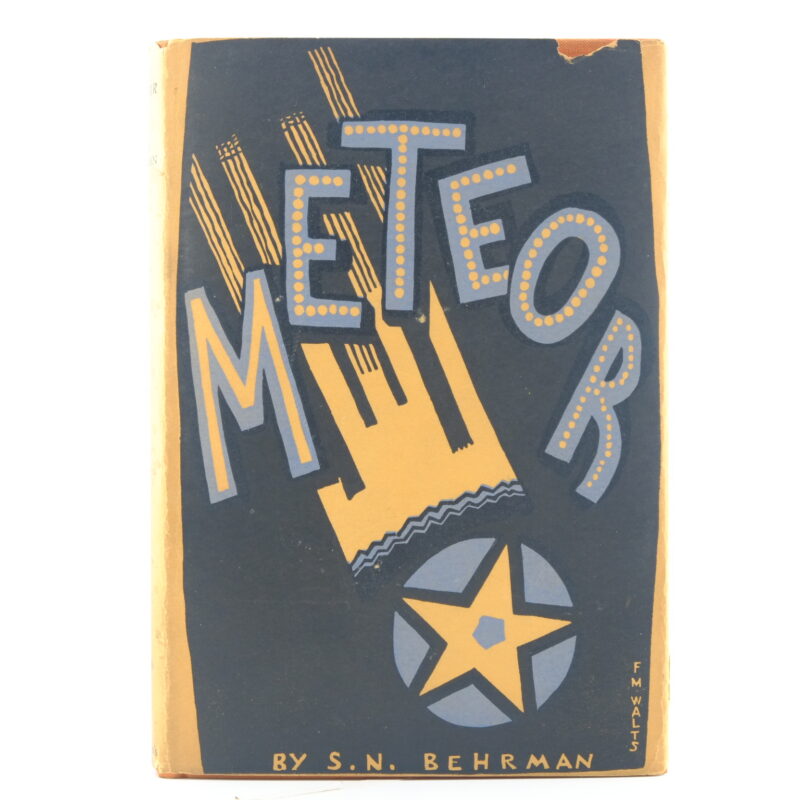 The 1930 dust jacket of Theatre Guild Plays edition of Meteor demonstrates this title using bold, graphic lines of the Art Deco style.
Typography became a central design element. Lettering was no longer merely functional; it was expressive, sometimes hand-drawn, and often integrated into the illustration itself. This fusion of art and text gave each jacket a distinct personality, making books instantly recognisable even from a distance.
Notable Designers and Their Legacy
Though many dust jackets were produced anonymously, several designers emerged as influential figures. Artists working in publishing houses or as freelancers brought a level of creativity that rivalled poster design and advertising. Their work reflected broader cultural trends of cinema, travel, and technology. Limited colour printing forced designers to be inventive, using contrast and composition to maximum effect, resulting in designs that remain fresh nearly a century later. Aubrey Hammonds significant image for the Metropolis remains a classic design from 1927. 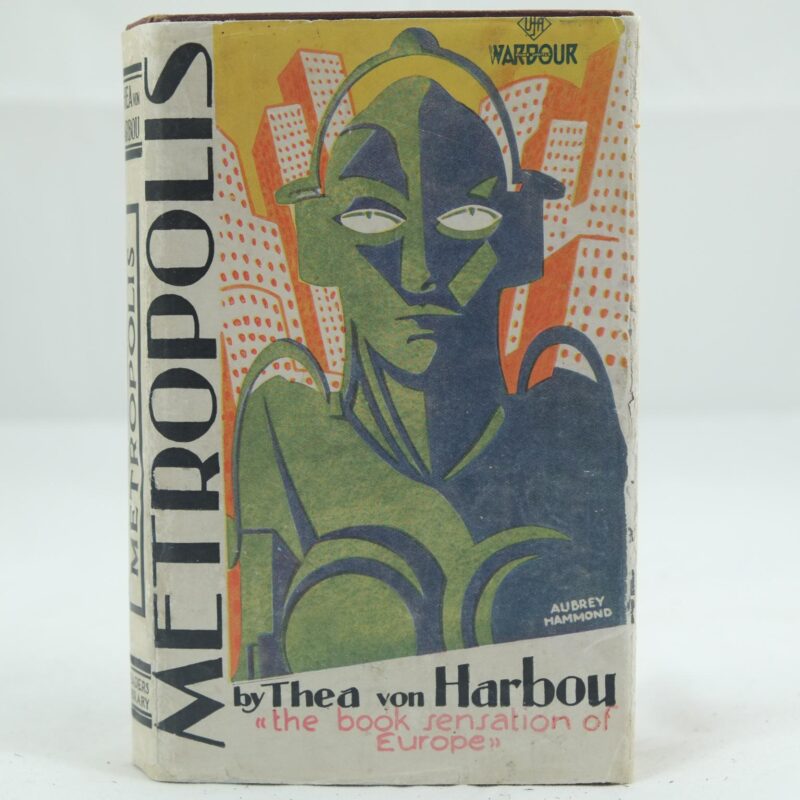
Fragility and Rarity
Ironically, the very ephemerality that once defined dust jackets now contributes to their desirability. Printed on inexpensive paper and often discarded, few have survived in fine condition. Sun fading, tears, and loss are common, making intact examples increasingly scarce. This scarcity has reshaped the antiquarian market. A well-preserved 1930s dust jacket can significantly enhance a book’s value, sometimes exceeding the worth of the binding itself. Collectors seek not only rarity but also the visual appeal of clean lines, vibrant colours, and minimal restoration.
Enduring Appeal
Why do 1930s dust jackets continue to captivate? Perhaps it is their balance of restraint and boldness, or their ability to convey narrative through design alone. The golden era of 1930s dust jackets stands as a testament to the power of design in shaping literary culture. For collectors and dealers alike, these works offer a compelling blend of history, artistry, and rarity. Preserving them is not merely a matter of commerce, but of stewardship—ensuring that future generations can appreciate the elegance and ingenuity of a bygone age.
Browse other Modern First Edition Books